WHO AM I?
Two of our children gave us “tell me your story” books for Christmas this year. (They did this unaware that the other was doing the same). Basically, they are “fill in the blank” journals containing questions and prompts designed to create a personal narrative which can then serve as a way to preserve family history (presumably once we’re no longer here, or we’re too far gone to remember things). The questions range from trivia such as favorite songs or movies, to more in depth prompts about spirituality, ambitions, and regrets. Being a long-time journaler and part-time blogger, I love the idea; and I really appreciate the prompts as a way of sharing both the incidental as well as the truly transformational events of my life. I have always hoped that some of my ramblings could be collected in some type of memoir for my children, and one of the reasons I started this blog was to preserve some of those memories. But the concept of these books inevitably makes me wonder why?
Why the fascination with all the things that make up a particular person? And why the eternal question of “Who am I”? “What am I here for?”
It really is an “eternal” question. Aristotle, the Greek philosopher born in 384 B.C., was credited with saying “Knowing yourself is the beginning of all wisdom.” But does part of that knowing oneself include knowing one’s family, both the family of origin and, in some cases, the family that raised you? The debate over “nature vs. nurture” has long raged in the fields of psychology and genetics. Okay, well maybe “raged” is a bit extreme, but the debate has certainly been long-standing and on-going. There are extremes on both sides of the debate- with “nativism” being the extreme nature side, and “empiricism” being the other end of the spectrum. And more recent studies in the newer field known as “epigenetics” do a deep dive into how things such as trauma and extreme stress can impact our DNA; not that our DNA itself is altered, but instead that these extreme circumstances can impact the response (or non-response) of genes.
This is a very loose, non-technical explanation of the current field of psychology and genetics; so much has changed in the 40+ years since I studied psychology. But while working with children in the foster care system not that long ago, I was required to read several studies on the effect of childhood trauma on individuals. It was impossible to look at the children I met with regularly and not wonder “what if?” What if they had not been so terribly abused, physically and emotionally; what if they had not witnessed abuse of others; what if they had not had parents caught up in addiction or criminal activity? How much of the behavior of these children was a result of learned behavior, and how much were they “born with”? Or did that exposure to trauma alter the way they responded to life?
These are deep, somewhat disturbing questions which I don’t think will ever be entirely answered by studies. And I certainly didn’t intend to make this blog a treatise on the “nature vs. nurture” debate. Rather, it’s that this recent activity of filling in these books has caused me to once again look back on some of the life events which have shaped who I am.
Several years ago, Lysa Terkeurst wrote a book called Forgiving what you can’t Forget (Thomas Nelson Publishing, 10/21/20). In that book, she proposed an exercise which consisted of “collecting the dots”, “connecting the dots”, and then “correcting the dots”. The idea, simpified, was to collect the “dots” or events of our stories that contributed to who we were, both good and bad, and then connect those events to present life choices, specifically in regard to relationships. The “correcting” was part of the forgiveness process which she says is necessary to move forward and truly live in freedom from past hurtful experiences. As I completed that exercise, I was a bit sad when I realized how little I knew about either of my parents’ childhood years. Sure, there were a few anectodal accounts passed on: my mother won a dog by writing an essay for a radio contest; my father took apart a trombone and tried to make two instruments out of one. But we weren’t aware of anything substantive with regard to relationships within their families, events which may have been some of those “dots” that, if collected, could explain or shed light on some of their choices and attitudes as adults.
When I look back on my own childhood, I know there are certain events or memories which influenced my later years. I always struggled with my weight (still do), and my father was hyper-focused on that. My siblings all had athletic abilities while I have never demonstrated any form of hand-eye coordination. So was my tendency to be overweight a result of genetics? Or was it due to the fact that I would rather be reading a book while my sisters were riding bikes? Was my love of music and the pursuit of that built in? Or was it handed down through the discipline of lessons and listening? My father and some of his family exhibited some musical ability while my mother’s family didn’t seem to have that talent. My children all have a love of music as well as being “good” at it. Was the addictive behavior I exhibited later in life inherited? Or was it a learned response, a futile attempt at controlling people or situations in my world?
All of this also makes me think of my years of experience with small groups of different types, whether in bible studies or other organizations. As a facilitator we were often given “ice breaker” questions, and it was always fascinating to see how someone described themselves as a sort of introduction: by their career or job, as a spouse or single, as a parent or not, as an only child or one of several. The fascination, for me at least, was in what people thought was important to share; what made them unique or “special”. What made them THEM. It was sad, sometimes, to observe what people thought really mattered. And it made me reflect on my answers to those questions at different times in my life: oldest of 4, lawyer, widow, married, mother of 3. No doubt these roles or events contribute to who I am today, but isn’t my response to each one the thing that really matters; how I embrace or incorporate those details?
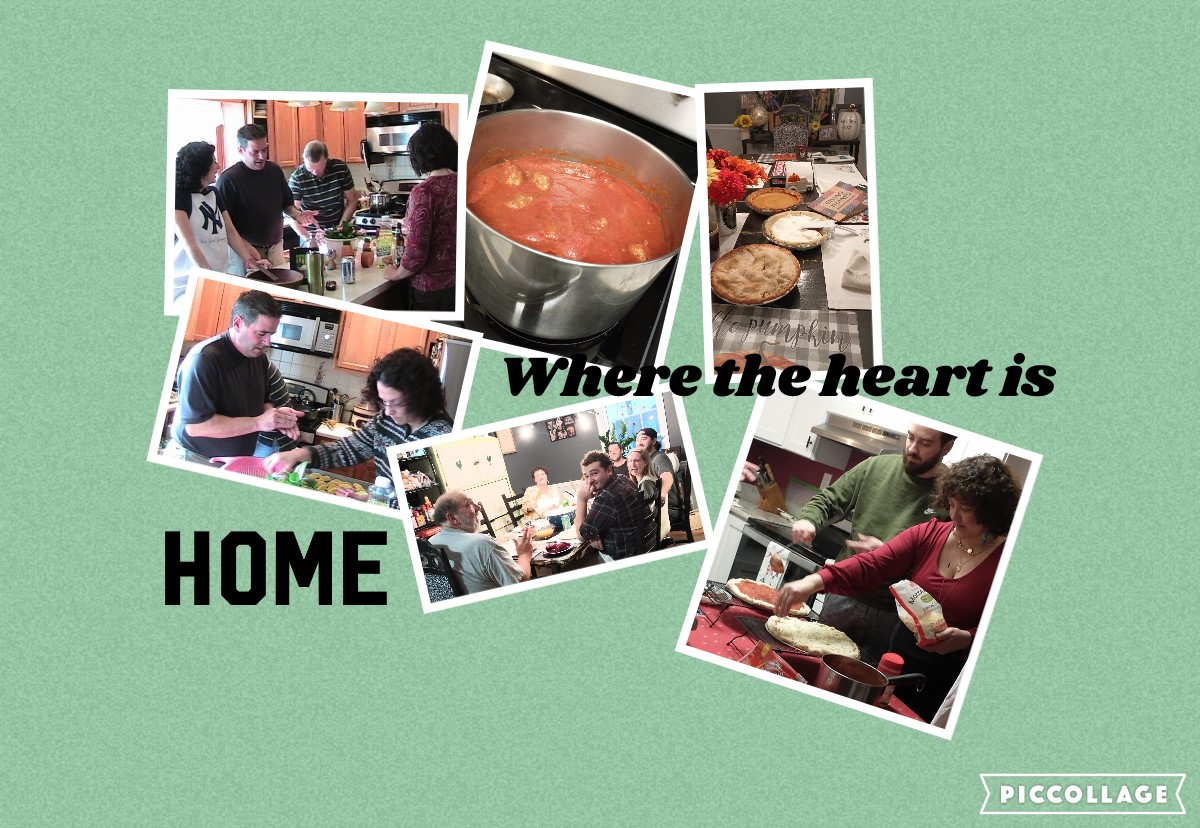
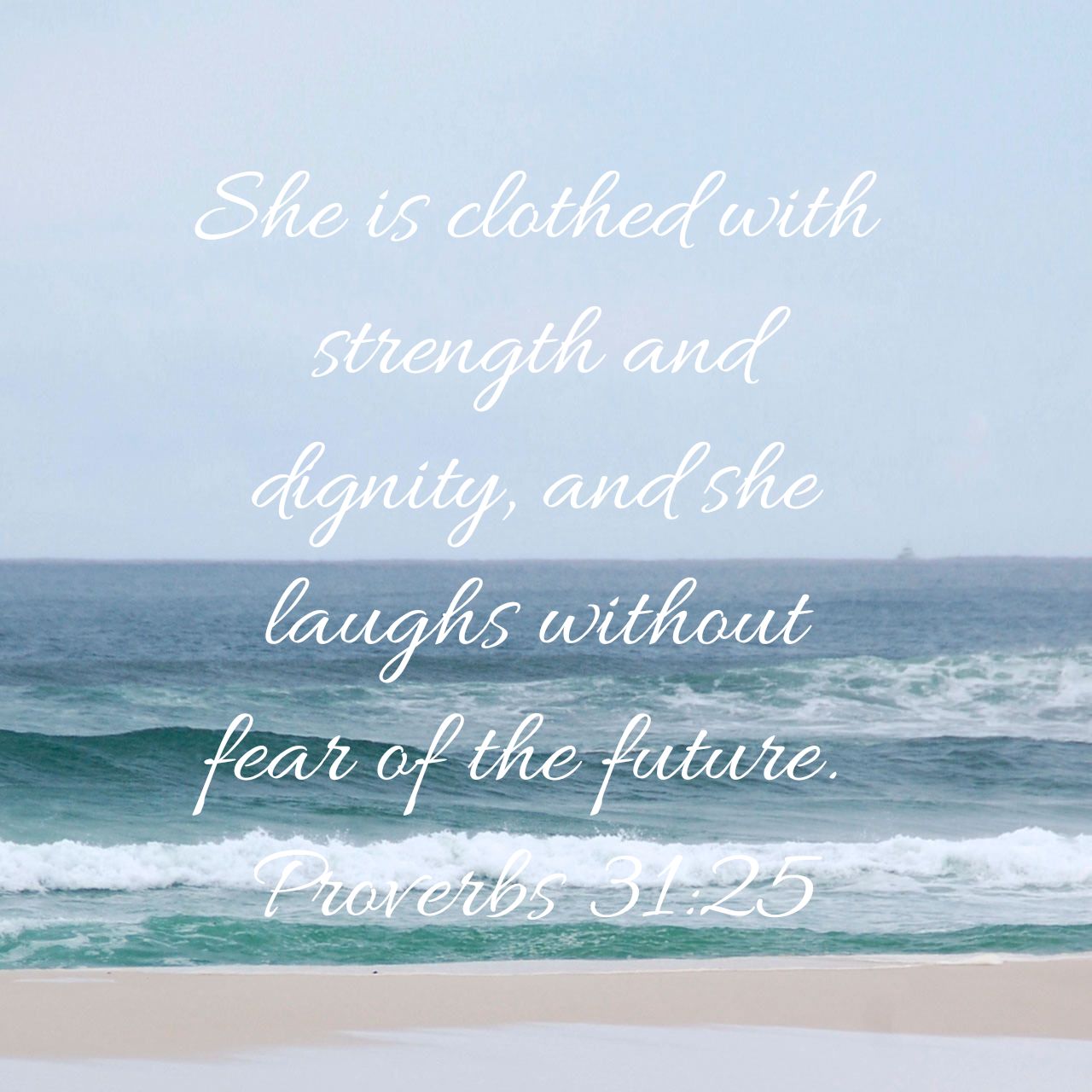
I really have no definitive answer to any of these questions. I don’t know that I ever will, or that those answers are the ultimate goal. I do know that going through these books and reaching for the memories of my childhood and onward have produced some melancholy and regrets, mostly that I didn’t gather this sort of information from my parents while they were still here; it has also produced hope in that I have used those life experiences, good and not so good, to intentionally speak into my role as a parent; but mostly it has given me gratitude for the gift I have been given in seeing the wonderful humans that have come about as a result. Whether it’s through my DNA, my clumsy mothering, a combination of both, or in spite of both, I pray they see that they are all “fearfully and wonderfully made”. That who they are is not what they do for a living, or how they did in school, or where they live, or what abilities they have or they lack, but that they are beautiful sometimes flawed humans raised by equally flawed parents who love them no matter what. And isn’t that the real legacy?





 ashestobeautyblog